
Table of Contents
- Why Government Auctions Are the Best Place to Find a Dump Truck for Sale
- What Types of Dump Trucks Show Up at Government Auctions
- How to Search for a Dump Truck for Sale on Municibid
- What to Check Before You Bid
- How the Bidding Process Works
- Winning, Paying, and Picking Up Your Truck
- What Buyers Are Actually Paying: Setting Realistic Expectations
- Frequently Asked Questions
- FAQs
If you've been searching for a dump truck for sale and keep running into dealer markups, vague private listings, or equipment that's been run hard with no documentation, government auctions are worth a serious look. Municipalities, counties, highway departments, and school districts retire working trucks on a regular schedule, not because the equipment is failing, but because fleet policies require turnover at a set age or mileage. That means buyers with patience and a little know-how can find solid, well-documented surplus dump trucks at prices that are hard to match anywhere else. This guide walks you through the entire process, from finding a listing to driving (or hauling) your truck home.
Why Government Auctions Are the Best Place to Find a Dump Truck for Sale
Dealerships price for profit. Private sellers price for what they think they can get, and documentation is often thin. Government agencies operate differently. They sell surplus equipment because they have to: fleet replacement schedules, storage constraints, and public accountability all push them toward regular disposal. The dump trucks they sell were maintained by public works crews, serviced on schedule, and documented in government records.
Price is the other obvious draw. Because agencies aren't in the business of maximizing resale value — and because they're selling to whoever bids highest rather than negotiating toward a target number — final prices often land well below what a comparable truck would cost at a dealership. The range varies (more on that later), but the structural advantage is real.
There's also a community angle worth mentioning. When you buy through Municibid, 100% of the proceeds go back to the selling agency. That means the money you spend on a county highway dump truck goes back into that county's budget for road repairs, equipment, and public services. It's a straightforward transaction that happens to do some good.
What Types of Dump Trucks Show Up at Government Auctions
The variety is broader than most first-time buyers expect. Government fleets cover a wide range of hauling needs, so the surplus market reflects that range.
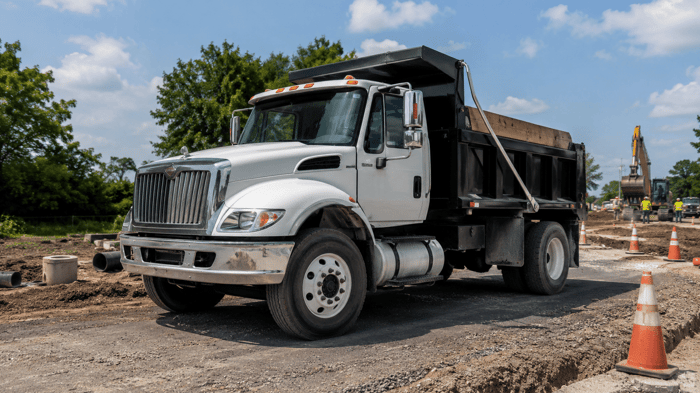
- Single-axle dump trucks are the most common. These are the workhorses of municipal DPW fleets — used for pothole patching, debris removal, and light hauling. They're maneuverable enough for residential streets and show up frequently in auctions from towns and townships of all sizes.
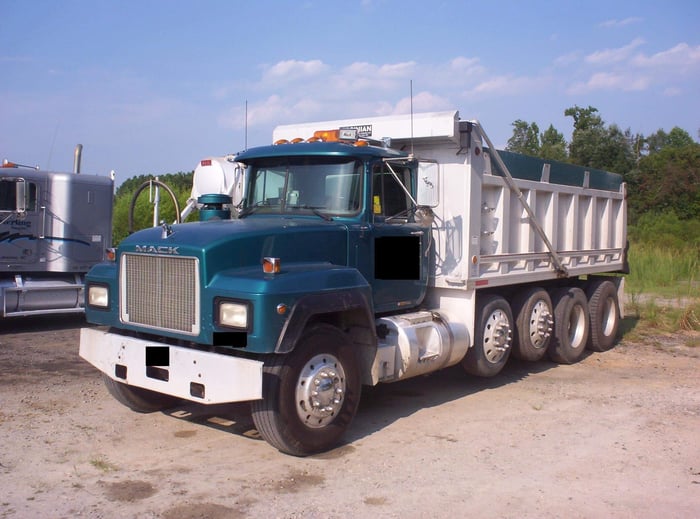
- Tandem-axle dump trucks carry heavier loads and are standard equipment for county road crews and state highway departments. If you need capacity, these are the ones to watch for.
- Flatbed dumps appear less often but do come up, particularly from public works departments that use them for equipment transport and material delivery.
- Plow-equipped highway trucks are a significant subcategory in northern states. A truck that spent its life plowing county roads will have high hours, but it also comes with installed plow equipment that adds value for buyers in the same climate.
- Combination units — trucks equipped with dump bodies plus spreaders, water tanks, or other attachments — turn up from highway departments that configured them for specific seasonal work.
Common makes include International, Mack, Peterbilt, and Ford F-series (particularly the F-750 and F-800 range for medium-duty applications). Knowing which makes you're looking for helps you build smarter saved searches and move faster when the right used dump truck listing appears.
The primary sellers are DPW fleets, county highway departments, and road crews. These are agencies that buy equipment new, maintain it consistently, and sell it on a predictable schedule. That predictability is good news for buyers as listings come up regularly, not just when something breaks down.
How to Search for a Dump Truck for Sale on Municibid
Municibid's search tools are built specifically for public-sector surplus, which means the filters are actually useful rather than an afterthought. Here's how to work them effectively.
Start with a keyword search. "Dump truck" is the obvious entry point, but try variations: "tandem dump," "single axle dump," "plow truck," or a specific make like "International dump." Municibid's dump truck listings are also browsable by category, which is useful when you want to see everything available rather than filtering by a specific term.
From there, narrow by location. You can filter by state or set a radius from your zip code. This matters for dump trucks specifically because pickup is almost always the buyer's responsibility — a great deal on a truck four states away can get expensive fast when you factor in transport. Start with a reasonable radius and expand if inventory is thin.
Sort by auction end date. Listings closing soon deserve immediate attention; listings closing in two or three weeks give you time to research and arrange an inspection. Both views are useful depending on where you are in the process.
The most underused feature for serious buyers is saved searches using the Municibid Auction Assistant, our official Google Chrome Extension. Set up an alert for your target criteria (make, type, state) and Municibid will notify you when a matching listing goes live. Government auctions run on agency timelines, not buyer timelines. An alert means you're not checking manually every day and missing a dump truck for sale the morning it posts.
If you want to browse adjacent categories, heavy-duty truck listings cover a broader range of commercial vehicles that sometimes include dump configurations not filed under the primary category.
What to Check Before You Bid
Online auctions reward prepared buyers. The information you need is almost always available before bidding opens. The question is whether you take the time to review it.
Photos. Look at every one. Government listings vary in photo quality, but most agencies provide enough to assess body condition, tire wear, and visible mechanical components. Look for rust on the dump body and frame, condition of the hydraulic lift, and the state of the cab interior.
Condition report. Read it carefully. Agencies are required to disclose known defects, so the condition report is your primary written protection. Pay attention to what's listed and what's conspicuously absent.
Mileage and engine hours. For dump trucks, engine hours can be more telling than odometer miles. A truck used primarily for short hauls around a municipality may have high hours relative to miles. Cross-reference both numbers against the truck's age to get a sense of how hard it worked.
Auction terms. Every listing sells as-is, where-is. That's standard for government surplus and not a red flag — it's just the reality of public-sector disposal. What matters is understanding the specific terms: payment deadlines, pickup windows, and what happens if you can't arrange transport in time.
Seller questions. Municibid's platform lets you submit questions directly to the selling agency. Use this. Ask about mechanical condition, whether the truck was in regular service until recently, and whether any known issues aren't reflected in the listing. Most agencies respond, and the answers are visible to all bidders which keeps the process transparent.
In-person inspection. When geography and timing allow, arrange one. Many agencies accommodate pre-auction inspections during business hours. Seeing the surplus dump truck in person, starting it, checking the hydraulics, looking under the body, is worth the trip for any significant purchase.
How the Bidding Process Works
If you've never bid in an online auction before, the mechanics are straightforward. Municibid is built for public-sector surplus specifically, so the process is cleaner than general marketplaces where government listings are an afterthought.
Registration. Create a free account on Municibid. You'll need to provide basic contact information. Some auctions require additional verification before you can bid, the listing will tell you what's needed.
Opening bid. Most listings have a starting bid set by the agency. Place your first bid at or above that number to enter the auction.
Proxy bidding. This is the feature most first-timers underuse. Enter the maximum amount you're willing to pay, and the system bids on your behalf in small increments up to that ceiling. You don't have to monitor the auction in real time — your proxy bid competes automatically. If someone outbids your maximum, you'll receive a notification and can decide whether to increase your ceiling.
Reserve prices. Some listings have a reserve — a minimum price the agency needs to meet before the item sells. If the auction closes below reserve, the item doesn't sell. Not all listings have reserves, and Municibid will indicate whether a reserve applies.
End-time extensions. To prevent last-second sniping, Municibid extends the auction clock when a bid comes in within two minutes of closing time. This gives all active bidders a fair chance to respond. It's a buyer-friendly feature that keeps the process honest.
Winning, Paying, and Picking Up Your Truck
When the auction closes and you're the high bidder, the agency will contact you with payment instructions. Payment timelines vary. Some agencies require payment within 24 to 48 hours, others allow a few business days. Read the auction terms before you bid so you're not caught off guard.
Payment methods are set by the selling agency, not Municibid (unless Municibid is handling the transaction - which will be noted). Most accept wire transfer, certified check, or money order. Credit card acceptance varies. Cash is sometimes allowed for in-person pickup. The listing or post-auction communication will specify what's accepted.
Title transfer for government vehicles follows state-specific procedures. The agency will provide the necessary documentation — typically a government-issued title or bill of sale — that you'll use to register the truck in your name. The process is generally cleaner than private sales because government agencies have clear title and the paperwork is handled through official channels.
Pickup logistics are the buyer's responsibility. For a dump truck, that usually means either driving it away (if it's road-legal and you're comfortable doing so) or arranging a flatbed or lowboy transport. Factor this cost into your total purchase price before you bid. A truck that looks like a great deal at $8,000 requires a different calculation if transport adds another $1,500.
Pickup windows are typically set by the agency which tends to be five to ten business days after payment clears. If you need more time to arrange transport, communicate with the agency early. Most are reasonable about scheduling, but they do have storage constraints.
What Buyers Are Actually Paying: Setting Realistic Expectations
Government auctions offer real savings, but "below retail" covers a wide range. Setting realistic expectations before you bid protects you from both overpaying in the heat of competition and walking away from a good deal because you expected something unrealistic.
A few factors drive final prices more than any other:
- Condition and age. A five-year-old single-axle with documented maintenance history will attract more bidders and close higher than a fifteen-year-old truck with visible rust and a vague condition report.
- Competition. Popular listings in high-traffic states attract more bidders. A well-priced tandem-axle dump truck in a densely populated region can close at or near retail if enough buyers are watching. Listings in less-trafficked areas often close lower.
- Installed equipment. Plow setups, spreaders, and other attachments add real value and show up in the final price.
The practical advice: before you bid on any listing, spend 20 minutes researching comparable trucks on dealer sites and equipment marketplaces. Know what retail looks like for the year, make, and configuration you're considering. Set your proxy bid ceiling based on that research, not on auction excitement. The best buyers treat their maximum as a firm number decided before the auction opens — not a moving target adjusted upward in the moment.
Frequently Asked Questions
Do I need a commercial driver's license (CDL) to buy a dump truck at auction?
Buying a dump truck at auction doesn't require a CDL — anyone can bid and win. Whether you need a CDL to drive the truck away depends on the vehicle's gross vehicle weight rating (GVWR) and your state's licensing rules. Single-axle trucks in the medium-duty range (F-750, F-800) often fall below the federal CDL threshold of 26,001 lbs GVWR, but tandem-axle and heavy-duty trucks typically require a Class A or Class B CDL to operate on public roads. Check the truck's GVWR in the listing and verify your state's requirements before you plan on driving it home. If you're not licensed for the vehicle, arranging flatbed transport is the straightforward solution.
Can I inspect a dump truck before bidding on Municibid?
In many cases, yes. Municibid listings often include inspection details — a contact name, phone number, and available hours for viewing the equipment in person. When an inspection opportunity is listed, take it seriously. Starting the engine, testing the hydraulic lift, and walking the frame for rust takes 30 minutes and can save you from a costly surprise. If no inspection details are listed, use Municibid's seller question feature to ask directly. Most agencies are accommodating, especially for larger purchases like a used dump truck.
What happens if I win an auction but can't complete the purchase?
Winning bidders are legally obligated to complete the purchase under the terms set by the selling agency. If you back out, you may forfeit any deposit paid and risk being banned from future auctions on the platform. The practical takeaway: don't bid on a dump truck for sale unless you've confirmed your financing, arranged your transport logistics, and are genuinely prepared to follow through. Treat your maximum bid as a commitment, not a placeholder. If something changes after you win, contact the agency immediately — most will work with you on timing, but they won't simply release you from the sale without consequence.