
Table of Contents
- Where Most People Look for a Used SUV for sale (and Why They Overpay)
- What Government Auctions Actually Are
- Why Government Auction Prices Are Often Lower
- What Kinds of SUVs Show Up at Government Auctions
- How to Find and Bid on a Used SUV on Municibid
- Five Things to Check Before You Bid
- Ready to Search Used SUVs for Sale Near You?
- FAQs
If you're searching for a used SUV for sale and you've only been looking at dealerships, CarMax, or Facebook Marketplace, you're missing a category of seller that consistently offers some of the most competitive prices on the market. Government auctions, where municipalities, school districts, and public agencies sell off surplus fleet vehicles, are one of the best-kept secrets in used car buying. This guide walks you through exactly how they work, what to expect, and how to find your next SUV through a platform built specifically for this market.
Where Most People Look for a Used SUV for sale (and Why They Overpay)
The typical used SUV search follows a familiar path. You check a dealership lot, browse CarMax or Carvana, scroll through Facebook Marketplace or Craigslist, maybe look at a few listings on AutoTrader. These are all reasonable starting points, but they share a common problem: every seller in that list has a financial incentive to price as high as the market will bear.
Dealerships recondition vehicles, pay sales staff commissions, and carry overhead that gets baked into the sticker price. Private sellers on Marketplace are negotiating from emotion as much as logic. CarMax and similar retailers have streamlined the process, but streamlined convenience comes with a premium.
None of that is a criticism. It's just how those markets work. The point is that there's an entirely different category of seller operating under completely different incentives, and most buyers never think to look there. That category is government agencies selling surplus fleet vehicles through public online auctions.
What Government Auctions Actually Are
Every year, thousands of local governments, school districts, county agencies, and public utilities retire vehicles from their fleets. Police departments cycle out patrol vehicles. Public works departments replace aging SUVs and trucks. School districts sell off administrative vehicles. State agencies dispose of cars that have hit their replacement mileage threshold.
These agencies aren't car dealers. They don't want to be in the business of selling vehicles. What they want is to recover some of the public money that was spent on those assets, and to do it transparently, in a way that's accountable to taxpayers.
That's where online government auction platforms come in. Rather than holding a physical auction or accepting sealed bids at city hall (a process that often attracted very few bidders and produced underwhelming results), agencies list their surplus vehicles on platforms like Municibid, where any registered buyer can see the listing, review the details, and place a bid.
The key distinction from a trade-in or private sale: these are fleet vehicles with documented histories, sold by public entities that are required to disclose what they know. The goal is fair market value, not profit. No one is trying to squeeze an extra $2,000 out of you to hit a monthly quota.
Why Government Auction Prices Are Often Lower
There are structural reasons why government auction prices tend to come in below what you'd pay elsewhere, and they're worth understanding before you start bidding.
No dealer overhead. A dealership has a physical lot, a service department, a sales team, advertising costs, and financing operations. All of that gets recovered through vehicle margins. A township selling a surplus SUV has none of those costs. The vehicle goes straight from fleet to listing.
No reconditioning markup. Dealers typically recondition used vehicles before sale, including detailing, minor repairs, and new tires, and price accordingly. Government agencies generally sell as-is. That means you need to factor in condition carefully (more on that below), but it also means you're not paying for a $600 detail job and a set of tires the agency bought for $400.
No sales commission. Nobody at the agency earns a percentage of the sale price. There's no incentive to hold out for a higher number. The auction closes when the timer runs out, at whatever price the market produced.
Competitive bidding sets the price. Online auctions are transparent. Every bidder sees the same listing and the same current bid. The final price reflects what actual buyers were willing to pay, not what a dealer decided to list it at.
The result is that you'll regularly find SUVs priced significantly below comparable retail listings. A well-maintained administrative vehicle with 80,000 miles that would sit at $14,000 on a dealer lot might close at $8,000 to $10,000 at a government auction, depending on demand and the specific vehicle. Prices vary. Some auctions attract competitive bidding and close higher; others don't. But the structural advantages are real and consistent.
There's also a community angle worth noting. When a government agency recovers $9,000 on a surplus SUV instead of $3,000 from a trade-in, that difference goes back into the public budget, covering road maintenance, equipment upgrades, or school supplies. Buying at a government auction isn't just a good deal for you; it's a better outcome for the community that owned the vehicle.
What Kinds of SUVs Show Up at Government Auctions
The short answer: there is a wide range of SUVs for sale on Municibid, with some patterns worth knowing.
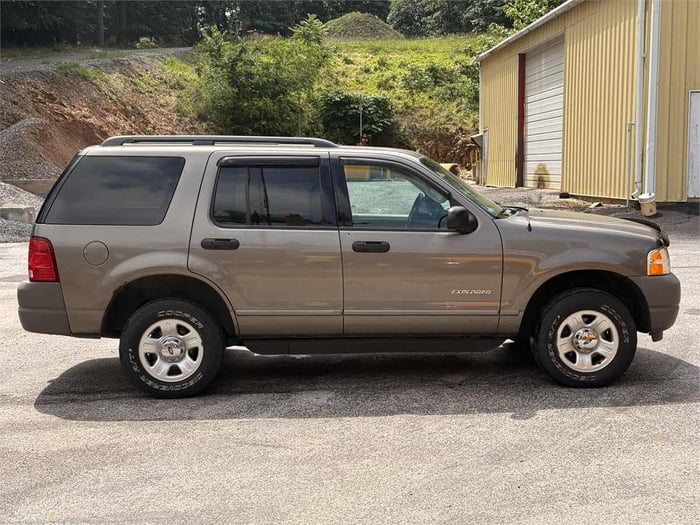
Common makes and models. Ford Explorers are extremely common. They've been a staple of police and administrative fleets for decades. Chevrolet Tahoes show up regularly, particularly from law enforcement and emergency management agencies. Dodge Durangos, Ford Expeditions, and Chevrolet Suburbans appear frequently in larger fleet disposals. You'll also see a fair number of Ford Escapes and Chevrolet Equinoxes from administrative fleets that needed smaller, more fuel-efficient options.
Mileage ranges. Fleet vehicles are typically replaced on a mileage or age schedule, so expect to see SUVs in the 80,000 to 150,000 mile range as the most common bracket. Some agencies replace vehicles earlier; others run them longer. High-mileage vehicles can still be good buys if they've been maintained on a fleet schedule, which many have.
Condition. This varies more than mileage does. An administrative vehicle used by a department director will be in different shape than a former patrol SUV. Listings on reputable platforms will typically include photos, condition notes, and any known issues. Read them carefully. We'll cover this more in the due-diligence section.
Former police vehicles. These deserve a separate note because they're common and often misunderstood. Former patrol SUVs have high mileage and heavy use, but they've also been maintained on rigorous fleet schedules. Many buyers specifically seek them out for their mechanically sound condition. Others prefer administrative vehicles with lighter duty cycles. Both can be good buys; it depends on your priorities.
You can browse current SUVs for sale on Municibid to get a real-time sense of what's available and at what price points.
How to Find and Bid on a Used SUV on Municibid
The process is more straightforward than most first-time buyers expect. Here's how it works.
Create a free account. Registration is free and open to anyone. You don't need a dealer license, a business entity, or any special credentials. If you're a private individual who wants to buy a used SUV, you're eligible to bid.
Search by vehicle type and location. You can filter by category (SUVs specifically), by state or region, and by auction end date. If you need to pick the vehicle up in person, filtering by proximity makes sense. Some listings offer shipping coordination, which opens up your geographic range.
Review the listing thoroughly. A good government auction listing will include multiple photos, a description of the vehicle's condition, mileage, known mechanical issues, VIN, and pickup and payment terms. Take the time to read all of it. The photos and description are your primary research tools.
Run a vehicle history check. The VIN is in the listing. Use it. A Carfax or AutoCheck report will show you accident history, title status, and service records. This is a standard step and worth the small cost.
Place your bid. Set a maximum bid amount. The platform will automatically bid on your behalf up to that amount, in increments, as other bidders compete. You don't need to monitor the auction in real time, though it's worth checking in as the close approaches.
Monitor the close. Most auctions have an auto-extend feature. If a bid comes in during the final minutes, the clock extends slightly to allow a response. This prevents last-second sniping and keeps the process fair. Watch the final stretch if you're in a competitive auction.
If you win. You'll receive instructions for payment and pickup. Payment terms vary by agency. Many accept credit cards, cashier's checks, or electronic transfer. Pickup is typically at the agency's location within a set window. Read the terms before you bid so there are no surprises.
Five Things to Check Before You Bid
Government auctions are genuinely good deals, but they require more active due diligence than buying from a dealer with a return policy. Here's what to verify before you commit.
1. Read the full listing description. Not just the headline. The description often includes condition notes, known issues, and important disclosures that aren't visible in the photos. If the listing says "transmission shifts rough at highway speeds," believe it and price accordingly.
2. Note the pickup location. Government vehicles are sold by specific agencies in specific places. If the SUV is in a county three states away and you can't arrange transport, that's a problem. Check whether the agency offers any shipping coordination, or whether you'd need to hire a transport service independently.
3. Understand the payment terms. Each agency sets its own terms. Some require payment within 24 hours of auction close; others give you a few business days. Some accept credit cards; others require certified funds. Know the terms before you bid. Winning an auction and then failing to complete payment has consequences.
4. Factor in the as-is condition. Most government vehicles are sold as-is, with no warranty and no return option. That's standard and fair, but it means your due diligence needs to be thorough before you bid, not after. Price in a reasonable estimate for any work the vehicle might need.
5. Ask about a pre-purchase inspection. Some agencies will allow you to inspect the vehicle in person before the auction closes, or will accommodate a mechanic's inspection by appointment. It's worth asking. Not all agencies can accommodate this, but when they can, a $100 to $150 pre-purchase inspection can save you from a much larger surprise later.
None of these points are meant to discourage you. They're the same common-sense steps you'd apply to any significant used vehicle purchase. The difference is that with a government auction, the seller has a legal obligation to disclose what they know, and the listing process is transparent in a way that private sales often aren't.
Ready to Search Used SUVs for Sale Near You?
If you're in the market for a used SUV for sale and you haven't looked at government auctions yet, it's worth a few minutes to see what's currently listed. Browse active SUV auctions on Municibid to see current vehicles, pricing, and locations. Registration is free, and you can search without committing to anything.