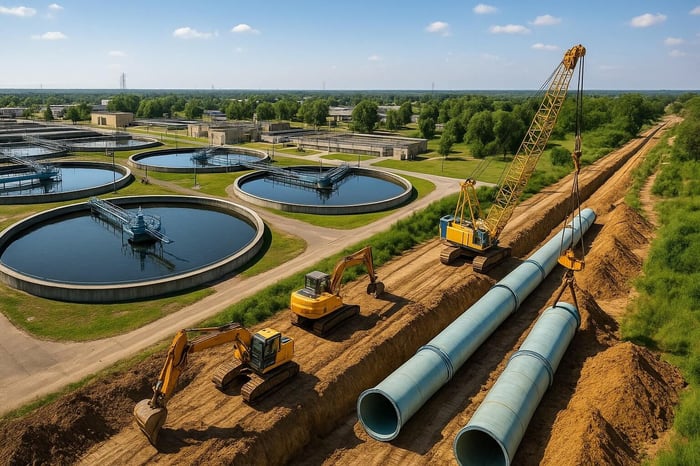
Water infrastructure is dominating municipal planning conversations in 2025. Across the country, towns and cities are prioritizing drinking water safety, wastewater compliance, and aging pipe replacement. These projects carry strict regulatory requirements and tight funding timelines, which makes them hard to postpone.
But as more attention and funding flow toward water and sewer upgrades, other local priorities like surplus liquidation often get pushed to the sidelines.
The Shift Toward Water-First Budgets
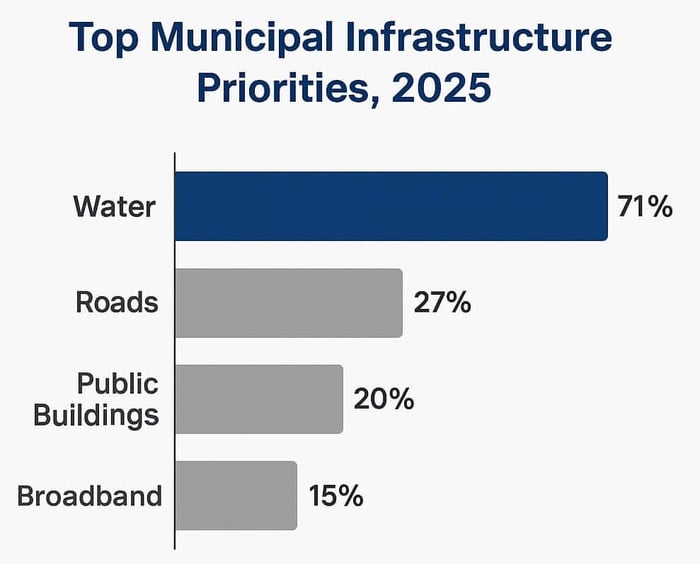
According to the National League of Cities (NLC) 2025 infrastructure survey, 71% of municipalities listed water systems as their top infrastructure concern this year, with roads coming in second. The reasons are clear: aging pipes, PFAS or “forever chemicals” regulations, and the multi-year spending windows tied to the Bipartisan Infrastructure Law.
Capital budgets that once covered fleet replacements or department upgrades are now being redirected underground. A 2024 American Water Works Association (AWWA) report found that 45% of U.S. utilities expect to boost capital spending by at least 10% through 2026.
When local governments have to choose between visible, must-do water projects and programs that feel more optional, surplus operations can get pushed aside. Staff who once handled equipment sales might now be managing contractor bids or construction schedules.
How This Affects Surplus Programs
1. Time Pressures Slow Surplus Sales
With public works, police, sewer, and transit crews focused on major water and road projects, there’s less time to manage listings, photos, or item descriptions. Equipment often sits idle in lots or garages until projects are complete, which means longer gaps between auctions and unpredictable inventory.
2. New Kinds of Surplus Gear
The upside is that water and wastewater projects can create entirely new asset liquidation categories. Valves, pumps, flow meters, inspection cameras, and treatment skids can draw specialized buyers. These items often retain strong resale value when listed with the right details and documentation.
3. Rising Demand for Turnkey Support
When staff capacity is limited, cities often look outward for help keeping surplus sales on track. Platforms like Municibid can manage listings and promotion, helping municipalities stay transparent and recover value even when workloads are heavy.
Why Surplus Still Matters in a Water Infrastructure-First Era
When water and road projects dominate local priorities, it’s easy for surplus management to slide down the list. But selling surplus efficiently supports the same infrastructure goals cities are working toward. Surplus programs should be a funding partner, not a distraction from capital work.
Every truck, generator, or pump that sells online converts unused equipment into new capital that can support water infrastructure funding. That revenue can help buy safety gear, pay for lab testing, or fund staff training. For smaller municipalities, even a few thousand dollars in recovered value can make a big difference.
Traditional sealed bids and live auctions often brought low turnout and limited visibility, leaving equipment in storage for months while it lost value. With as-needed online auctions, municipalities can sell gear as soon as it’s ready, avoid storage costs, and reach a broader audience of bidders.
Transparency is another advantage, since every sale generates a public bidding record that protects both staff and taxpayers. It’s one reason many small and mid-sized governments have made online surplus platforms part of their standard operating procedures.
How Cities Can Stay Ahead of the Shift
Forward-thinking municipalities are learning to align surplus strategies with their infrastructure plans, and some local governments are now building surplus schedules directly into their capital project timelines. St. Joseph, Michigan includes “scheduled replacement of equipment” alongside its infrastructure investments in its six-year capital improvement plan.
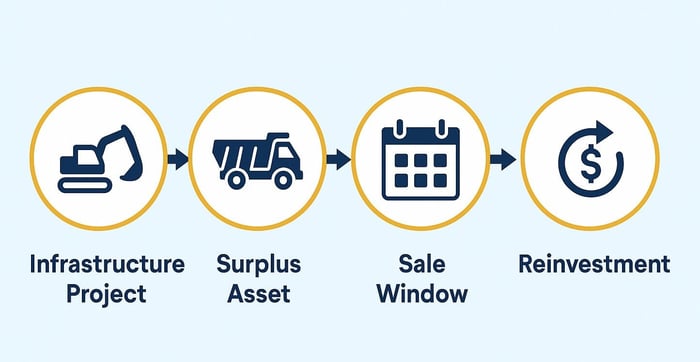
When a public works department knows that a fleet of trucks or inspection rigs will become surplus after a water main project, they can schedule those listings in advance. Coordinating between finance, operations, and public works teams turns disposal into a planned activity instead of an afterthought.
Cities that track their equipment and maintenance data in asset management systems such as Cityworks or Cartegraph are finding it easier to forecast when vehicles or machinery will be replaced. Linking those schedules with capital projects not only improves budgeting accuracy but also helps departments plan ahead for surplus sales, storage, and replacement needs. This approach reduces downtime, minimizes waste, and helps keep equipment lifecycles predictable year after year.
When water projects take the spotlight, surplus programs can easily fade into the background. By syncing disposal cycles with infrastructure planning and using efficient online tools, municipalities can keep their surplus strategy running smoothly.
In a time when every dollar matters, turning idle assets into usable revenue is one of the easiest wins available to local governments. Municibid is here to help cities and towns make that happen efficiently, transparently, and on their own schedule.