
Table of Contents
- What Is the 2028 Ford Expedition Police Responder?
- Exterior: Built to Be a Blank Canvas
- Interior and Cabin Specs: What's Different from the Civilian Expedition
- Police Technology Package: Dark Car Mode, Perimeter Alert, and Engine Idle
- Powertrain and Mechanical Specs: 400 HP, 480 lb-ft, and All-Terrain Capability
- Who Is This Vehicle For? Matching the Responder to Agency Needs
- What Happens When Police Vehicles Age Out: The Surplus Auction Angle
What Is the 2028 Ford Expedition Police Responder?
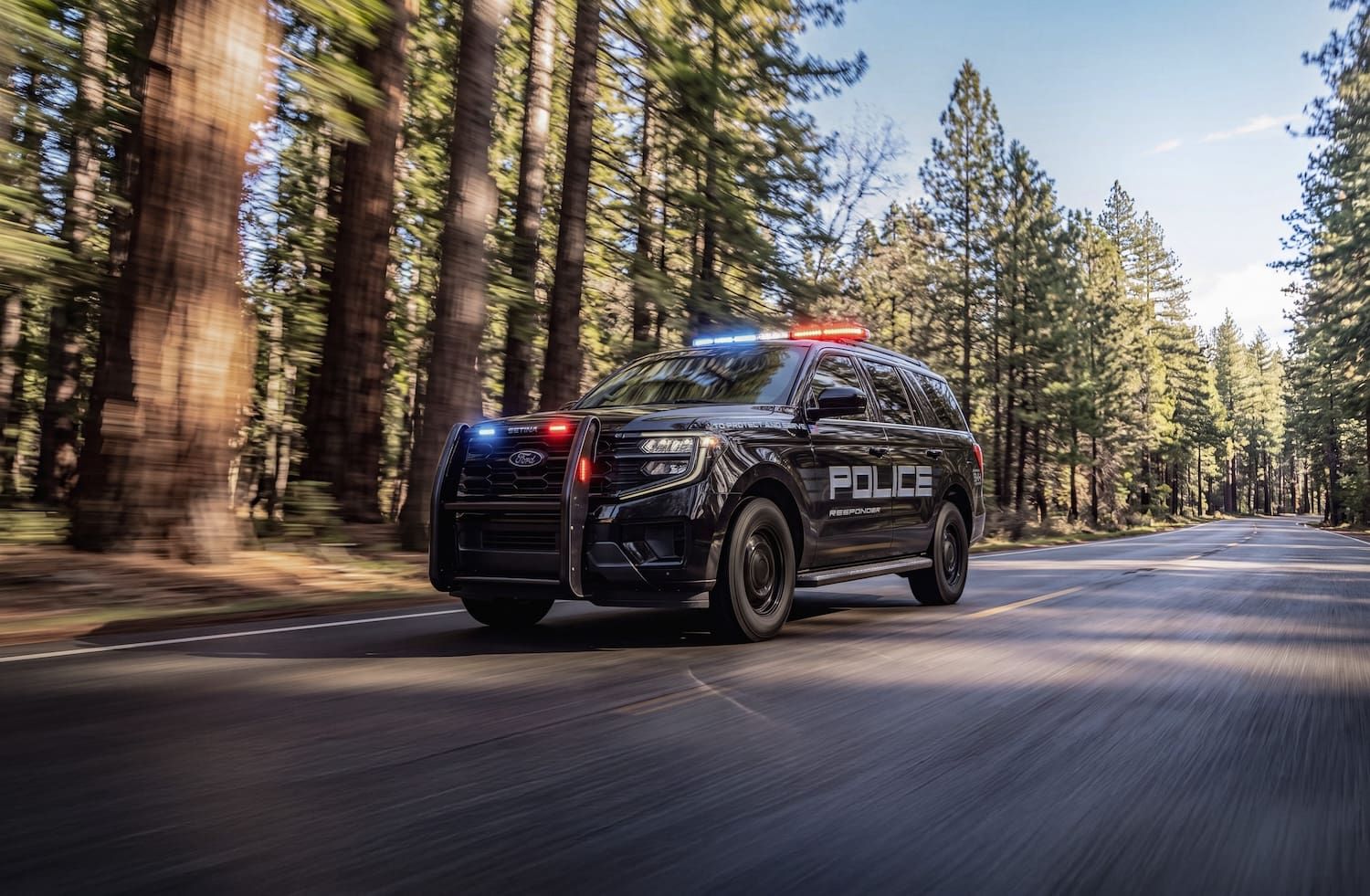
The Ford Expedition Police Responder is a pursuit-rated, full-size SUV built for law enforcement fleets. It pairs a 400-horsepower twin-turbo 3.5-liter V6 with a police-specific tech package, and is Ford's third dedicated police model.
Ford added the Expedition to its police portfolio after redesigning the SUV for the 2025 model year, when it introduced the Expedition SSV (Special Service Vehicle) as a utilitarian, law-enforcement-focused trim. The 2028 Expedition Police Responder builds on that foundation but adds pursuit-rated status. That means it has cleared additional durability and performance testing that agencies typically require for patrol and pursuit duty rather than administrative or support use.
The move makes sense given Ford's dominance in this category. Fleet managers already running Police Interceptor Utility or F-150 Police Responder units now have a third option that splits the difference: more interior room than the Interceptor Utility, more passenger capacity than the pickup, and a pursuit rating neither the standard Expedition nor the earlier SSV carried.
Exterior: Built to Be a Blank Canvas
Ford kept the exterior deliberately plain. The Expedition Police Responder rides on black 18-inch steel wheels wrapped in Goodyear Eagle Enforcer all-season tires straight from the factory, and it skips the styling touches you'd find on a civilian Expedition, chrome accents, badging flourishes, and trim-level cosmetic details.
That plainness is the point. A police vehicle spends its early life on an upfitter's floor before it spends a day on patrol, and every civilian styling cue an upfitter has to work around adds labor and cost. A steel-wheeled, unadorned SUV gives installers a clean surface for push bars, light bars, prisoner partitions, and agency markings without fighting factory trim.
For procurement officers, this also simplifies budgeting. Fewer optional cosmetic packages mean fewer line items to negotiate, and a more predictable base specification across a multi-vehicle order.
Interior and Cabin Specs: What's Different from the Civilian Expedition
Inside, the Expedition Police Responder seats five across two rows, all finished in black with hardware chosen for durability rather than comfort features civilians expect. Front seats use heavy-duty cloth with reduced side bolsters, a small but meaningful change that accommodates officers wearing duty belts and body armor for extended shifts.
The rear compartment gets anti-stab plates built into the seatback, vinyl flooring instead of carpet, and a vinyl rear bench rather than cloth. These are standard law-enforcement upfit choices: vinyl cleans up faster than fabric, and stab plates are a baseline safety feature for any vehicle that may transport a detainee.
Compared to a civilian Expedition, which can be configured with three rows and seating for up to eight, the Police Responder's two-row, five-passenger layout trades capacity for a purpose-built rear compartment. Agencies that need K-9 transport or extra cargo room for equipment will find the reduced seating count a feature rather than a limitation.
Police Technology Package: Dark Car Mode, Perimeter Alert, and Engine Idle
Three technology features define the Expedition Police Responder's tactical capability, and each solves a specific operational problem.
- Police Dark Car Mode shuts off all interior lighting, exterior marker lights, keypad illumination, and the touchscreen display. It's designed for surveillance or a tactical approach where any visible light could give away an officer's position.
- Police Engine Idle lets officers leave the vehicle running with the key physically removed, keeping emergency lights, radios, and onboard computers powered. At the same time, it locks the transmission in park and disables the power windows, closing off the most obvious theft opportunity.
- Police Perimeter Alert uses rear-bumper sensors to monitor up to 270 degrees around the parked vehicle. If a pedestrian approaches while an officer is inside doing paperwork, it sounds a chime, activates the rearview camera, rolls up the windows, and locks the doors automatically.
None of these features require the officer to take an action first. That's the operational value of the Expedition Police Responder's tech package: the vehicle responds to a threat or a tactical need before the officer has time to react manually.
Powertrain and Mechanical Specs: 400 HP, 480 lb-ft, and All-Terrain Capability
The Expedition Police Responder uses the same twin-turbocharged 3.5-liter EcoBoost V6 found in the civilian Expedition, rated at 400 horsepower and 480 pound-feet of torque. Power routes through a 10-speed automatic transmission to either the rear wheels or all four, depending on configuration, via an electronic-locking rear differential geared at 3.73.
A torque-on-demand transfer case and heavy-duty brakes round out the mechanical package, both factory-installed rather than dealer add-ons. The torque-on-demand system shifts power between axles automatically based on traction, which matters for departments patrolling rural roads, gravel lots, or unpaved terrain where a standard RWD sedan would struggle.
"Pursuit-rated" is a specific classification, distinct from the SSV designation the Expedition previously carried. Pursuit-rated vehicles undergo additional testing for sustained high-speed operation, braking under repeated hard stops, and structural durability. These standards were set with input from agencies like the Michigan State Police, which has long run vehicle testing programs used industry-wide.
SSV models are built for law enforcement use but aren't necessarily cleared for pursuit duty. That distinction matters when a department is deciding whether an Expedition Police Responder can run patrol and pursuit assignments or should be limited to administrative and transport roles.
Who Is This Vehicle For? Matching the Responder to Agency Needs
The Expedition Police Responder fits agencies that need more interior volume than the Police Interceptor Utility offers, particularly departments handling K-9 transport, supervisor and command functions, or equipment-heavy patrol roles where cargo space behind the second row matters.
Rural and county agencies patrolling unpaved roads or off-road terrain get real value from the torque-on-demand transfer case and locking rear differential, capability a standard patrol sedan or crossover can't match. Departments already running Ford fleets have an easier integration path too, since parts, service training, and upfit hardware often carry over across the F-150 Police Responder, Interceptor Utility, and now the Expedition.
Smaller municipal departments or command staff who need one capable vehicle rather than a mixed fleet of sedans and trucks may find the Expedition's dual role, patrol-capable but roomy enough for supervisory duty, covers more ground than a single-purpose vehicle would.
What Happens When Police Vehicles Age Out: The Surplus Auction Angle
Every pursuit-rated vehicle eventually rotates out of active service, typically after reaching a mileage or age threshold set by department policy. Agencies then need a transparent way to convert that asset back into budget. Online public auctions have become the standard route, replacing sealed-bid processes that often drew only a handful of bidders and left real value on the table.
Retired police SUVs and sedans, including former Expedition Police Responder units, draw strong interest specifically because of the heavy-duty components built in from the factory: upgraded brakes, reinforced suspensions, locking differentials, and engines chosen for sustained duty rather than daily commuting. Buyers browsing police and fire vehicle listings or general car auctions know that a decommissioned patrol vehicle often has more mechanical durability built in than a comparable civilian trade-in.
For agencies planning a fleet refresh, running the numbers on resale value through a competitive online auction is worth doing before the next Expedition Police Responder order goes out. A well-documented auction history also gives finance officers a clean paper trail when the money gets reinvested, whether that's toward the next vehicle purchase or another budget line entirely. Departments retiring other equipment alongside a vehicle fleet can also review broader automotive listings to see how comparable surplus has performed.