
Table of Contents
- The Surplus Yard Nobody Talks About in Budget Meetings
- How Undervaluation Becomes Policy
- What the Data Actually Shows About Recovery Rates
- The Compounding Cost of Inaction
- What High-Performing Agencies Do Differently
- Why Online Platforms Outperform Local Methods
- Common Questions About Improving Surplus Recovery
Government surplus recovery consistently underperforms at most agencies because sealed bids and local auctions limit competition by design. Online platforms that reach national buyer pools routinely return more than local methods, often surprising the finance directors who see the results.
The Surplus Yard Nobody Talks About in Budget Meetings
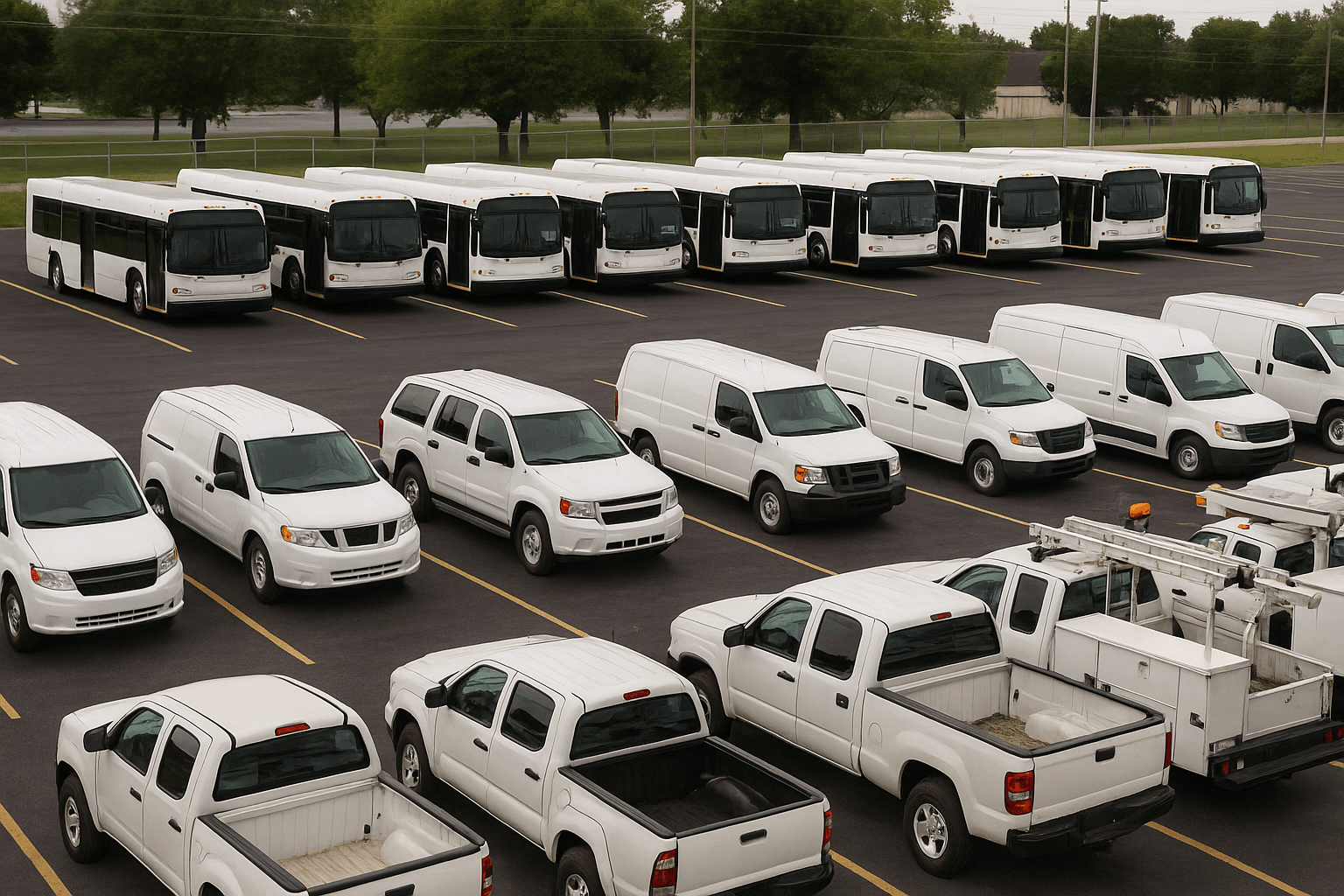
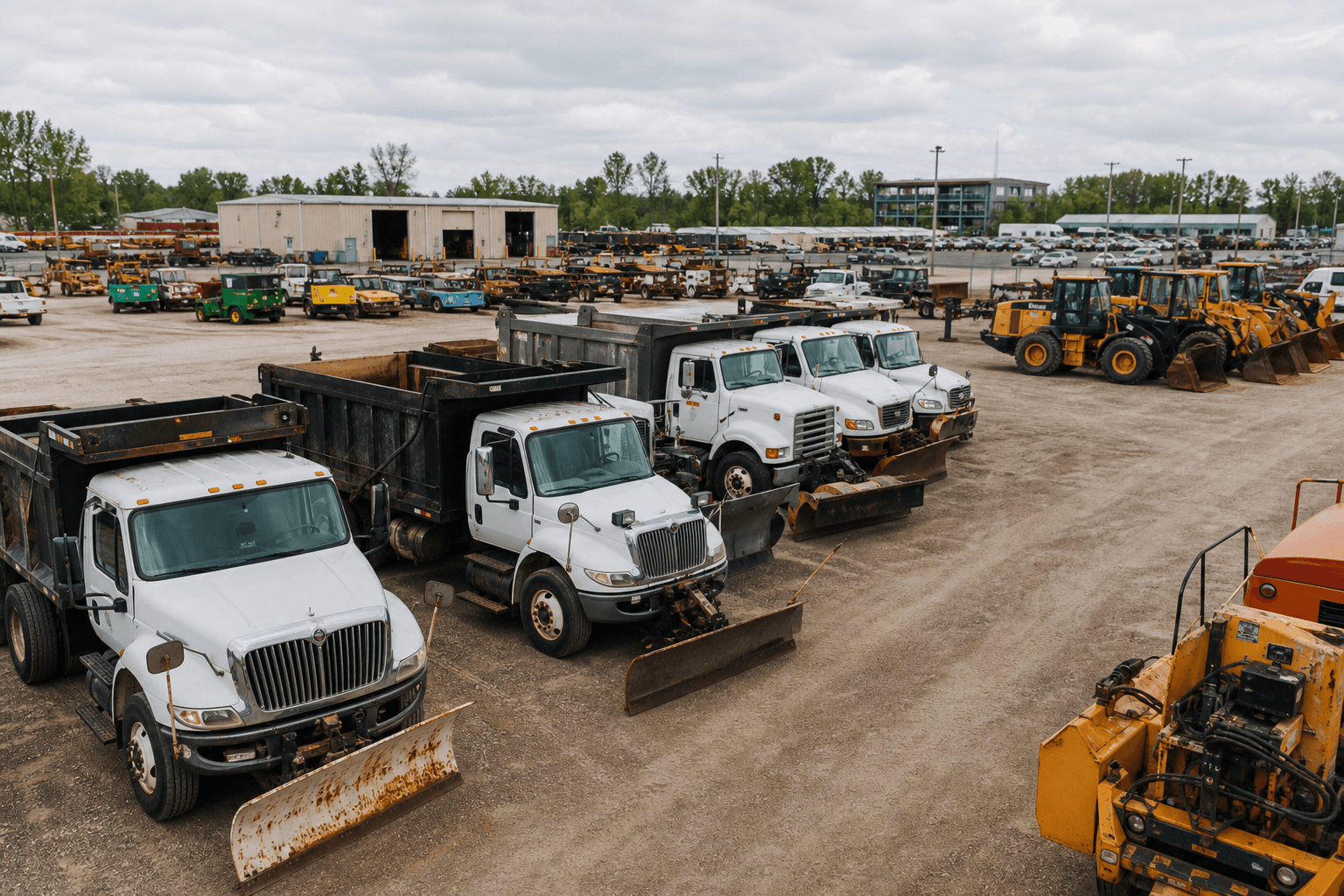
Picture the scene: a fenced lot behind the public works building, or a corner of the school district's maintenance yard. A 2014 Ford F-250 with a cracked windshield. A riding mower that hasn't run since the previous grounds supervisor retired. Three desks from an office renovation that happened before anyone on the current staff was hired. A trailer with an expired registration and no title anyone can locate.
None of this appears on a balance sheet in any meaningful way. Nobody budgeted for its disposal. Nobody is accountable for the recovery number. The fleet manager knows it's there. The finance director might know, in a general sense. But it doesn't come up in budget meetings, and it doesn't show up in performance reviews.
This is the default condition for surplus assets across thousands of local governments, school districts, and public authorities. It's not a failure of any individual agency. It's a structural feature of how public-sector asset management developed: incrementally, without a coherent disposal strategy, and with very little visibility into what the assets were actually worth.
The result is a quiet, chronic drain on public resources. Not dramatic enough to trigger an audit, not visible enough to generate political pressure. Just a steady erosion of value that compounds over time and rarely gets named for what it is.
How Undervaluation Becomes Policy
Most agencies that rely on sealed bids or local auctions for surplus disposal didn't choose those methods after evaluating the alternatives. They inherited them. The sealed-bid process was standard practice when someone set up the policy decades ago, and it became standard practice because nobody changed it.
There's a logic to that inertia. Sealed bids are familiar. They feel procedurally defensible. They generate a paper trail. For an agency primarily trying to avoid criticism rather than maximize revenue, they're a reasonable default. The problem is that "defensible" and "optimal" are not the same thing.
Sealed bids limit competition by design. A contractor in the next county who might have paid top dollar never hears about the auction. A collector three states away who specifically wants that make and model of vehicle doesn't know it's for sale. The pool of bidders is whoever happens to see the legal notice in the local paper, or whoever is already connected enough to know to ask.
Online competitive bidding changes the geometry of that problem. When the same asset is listed publicly and accessible to a national buyer pool, the competitive dynamics shift fundamentally. More bidders mean more bids. More bids mean prices that more accurately reflect what the asset is actually worth to someone who wants it, not just what the three local contractors are willing to pay to avoid driving to the next county.
The comparison isn't theoretical. Agencies that have moved government surplus recovery to platforms like Municibid routinely report outcomes that surprise their finance directors. Not because the platform is magic (although some call it just that), but because it connects assets to the buyers who actually value them.
What the Data Actually Shows About Recovery Rates
The strongest evidence for the value of competitive online disposal isn't anecdotal. It's in the pattern of outcomes across thousands of auctions over time. A few things stand out consistently.
First, categories that seem low-value locally often perform well nationally. Automotive surplus is the obvious example. Vehicles that a local dealer might offer $3,000 for on a trade-in regularly attract competitive bidding from buyers who have done their research and know exactly what they want. The same dynamic applies to heavy equipment, specialty vehicles, and even categories like furniture, where the right buyer at the right moment can push a final price well above any local estimate.
Second, geographic variation in demand is real and significant. An asset that's commodity-grade in one region may be genuinely scarce in another. Online platforms surface that mismatch in a way that local disposal methods never can.
Third, the gap between what agencies expect and what they receive tends to close, and then reverse, once they have a few auctions under their belt. Early skepticism about whether anyone outside the county would bid on a 2008 dump truck gives way quickly when the final bid comes in from a buyer in a different state who paid more than the agency thought the truck was worth.
None of this means every auction sets a record. Condition, documentation, and timing all matter. But the baseline expectation, that surplus assets are worth roughly what a local buyer will pay, consistently understates what a competitive national market will produce.
The Compounding Cost of Inaction
Here's the framing shift that changes how agencies think about surplus recovery: the decision to delay or deprioritize is not a neutral choice. It has a cost.
Depreciation is the obvious one. A vehicle that sits for eighteen months while the agency figures out what to do with it is worth less at the end of that period than it was at the beginning. For vehicles, equipment, and electronics, that depreciation is not trivial. A year of delay on a piece of heavy equipment can represent thousands of dollars in lost recovery value.
Storage has a cost too, even when it doesn't appear on an invoice. The lot space occupied by surplus assets is space that could be used for something else. The staff time spent managing, moving, and accounting for idle assets is time that could go toward something more productive. These costs are real even when they're not itemized.
There's a less obvious cost as well: the organizational cost of not knowing. Agencies without a clear picture of what their surplus is worth, and what it costs them to hold it, can't make good decisions about replacement cycles, storage capacity, or capital planning. The surplus yard is a symptom of a broader information gap, and that gap has downstream effects on budget accuracy and financial planning.
Framing government surplus recovery as a revenue opportunity is accurate but incomplete. It's also a cost-reduction strategy, a risk management tool, and a source of financial intelligence that most agencies are currently leaving on the table.
What High-Performing Agencies Do Differently
Agencies that consistently recover strong returns from surplus disposal share a few habits worth naming explicitly, because they're not complicated and they're not expensive to adopt.
Regular cadence. The agencies that do best don't wait until the surplus yard is overflowing to list assets. They build disposal into their operational calendar. When a vehicle comes out of service, it goes into the disposal pipeline. When an office renovation generates surplus desks and chairs, those get listed too. The result is a steady flow of auctions rather than occasional fire sales.
Good documentation and photography. This sounds basic, but it's where a lot of agencies underinvest. A listing with clear photos, accurate mileage, a known service history, and an honest description of condition will consistently outperform a listing with a single blurry photo and "sold as-is" in the description. Buyers make decisions with incomplete information; the more you give them, the more confident they are in bidding.
Realistic reserves. Setting a starting price and/or reserve too high is a common mistake. It feels like protecting the agency's interests, but it often just results in no sale, and then the asset sits for another cycle. Agencies that research comparable sales and set starting prices and reserves that reflect actual market value sell more assets at better prices than agencies that anchor to an inflated internal estimate.
Treating buyers as repeat customers. The best sellers on any platform understand that their reputation follows them. An agency that accurately describes condition, releases assets promptly, and handles questions professionally builds a buyer base that returns. That buyer loyalty shows up in competitive bidding on future auctions.
None of these habits require a dedicated staff position or a large budget. They require a policy decision that government surplus recovery is worth doing well, and a process that reflects that decision.
Why Online Platforms Outperform Local Methods
The National Association of State Procurement Officials (NASPO) has noted that online competitive bidding consistently expands the buyer pool for public-sector disposals, which is the single most reliable driver of higher recovery values. More competition, more accurate pricing. That principle holds whether the asset is a pickup truck, a piece of landscaping equipment, or a set of office furniture.
Local sealed-bid processes were designed for a world where geography limited who could participate. That world no longer exists. A buyer in Ohio can evaluate, bid on, and arrange transport for a surplus vehicle from a Pennsylvania township in the same afternoon. Agencies that haven't updated their disposal methods to reflect that reality are leaving measurable money behind on every transaction.
The shift to online disposal also creates a documented record of competitive market value. That documentation is useful beyond the individual transaction. It supports budget justifications, answers council questions, and provides a defensible basis for future reserve-price decisions. The procedural defensibility that sealed bids used to offer exclusively is now available through online platforms, with better financial outcomes attached.
Government surplus recovery done online also tends to surface demand in unexpected categories. Landscaping equipment, electronics, computers, and general supplies regularly attract buyers from outside the immediate region. Broadening the disposal strategy beyond vehicles and heavy equipment to include these categories compounds the recovery gains over time.
Common Questions About Improving Surplus Recovery
How long does it take to see results from switching to online auctions?
Most agencies see a difference within their first few completed auctions. The learning curve is short. Once staff are comfortable with the listing process and have seen a competitive auction close at a price above their local estimate, the approach tends to stick. The bigger shift is organizational: building disposal into regular operations rather than treating it as an occasional task.
What types of assets are worth listing online?
The short answer is: more than most agencies expect. Vehicles and heavy equipment are the obvious starting point for government surplus recovery efforts, but the same competitive dynamics apply to office furniture, electronics, landscaping equipment, and general supplies. If someone somewhere wants it, a national buyer pool will find them. The cost of listing is low enough that erring toward listing, rather than scrapping or donating, is usually the right call.
How should agencies handle assets with unclear titles or documentation gaps?
Transparency is the most important thing. A listing that clearly describes what documentation is available, and what isn't, will still attract buyers. What kills competitive bidding is uncertainty introduced late in the process. Agencies that surface documentation issues upfront, set appropriate reserves, and describe condition honestly tend to close auctions cleanly. Buyers factor known risks into their bids; unknown risks drive them away.
Government surplus recovery is not a glamorous topic. It (usually) doesn't generate headlines or win elections. But for the agencies that take it seriously, it generates real revenue that goes back into the community, into road repairs, equipment upgrades, and services that residents actually notice. That's worth a closer look.