


Table of Contents
- Why the Used Dump Truck Market Is Worth Your Time
- What Type of Dump Truck Do You Actually Need?
- Where to Find a Used Dump Truck for Sale
- What to Look for Before You Bid or Buy
- Understanding the Auction Process for Government Surplus Equipment
- How to Set Your Budget and Stick to It
- Common Questions About Buying a Dump Truck for Sale at Auction
- Ready to Find Your Next Dump Truck for Sale?
A used dump truck for sale from a government fleet typically costs 40 to 70% less than a comparable new unit, and it arrives with a documented maintenance history. Buy the right axle configuration for your payload needs.
This guide walks you through every step of buying a used dump truck for sale, from figuring out what you actually need to closing the deal. It puts particular focus on government surplus auctions, one of the most underused and most transparent sourcing channels available.
Why the Used Dump Truck Market Is Worth Your Time
The used heavy equipment market is large, active, and genuinely capable of delivering real value, if you know where to look and what to avoid. Quality used dump trucks, particularly those coming out of government and municipal fleets, routinely sell for 40–70% less than comparable new units. That spread is meaningful whether you're outfitting a two-truck landscaping operation or adding to a public works fleet.
The catch with the used market is information asymmetry. Private sellers know more about their truck than you do. Dealer lots have markup built in. Some auction channels mix well-maintained units with trucks that have been neglected for years.
Government surplus auctions are different. When a township, county, or school district sells a dump truck, they're disposing of an asset that was maintained on a schedule, often documented in detail, and owned by a single accountable entity. That's a meaningful advantage over buying from an unknown private seller.
This guide is written for three types of buyers: contractors who need a reliable workhorse without a new-truck payment, small businesses adding their first or second unit, and municipalities buying from other municipalities (a surprisingly common and efficient transaction). Whoever you are, the fundamentals are the same.
What Type of Dump Truck Do You Actually Need?
Before you start browsing listings for a dump truck for sale, spend fifteen minutes with this question. Buying the wrong configuration, even at a great price, is an expensive mistake.
Standard (Single-Axle) Dump Trucks
Best for: Landscaping, small construction jobs, residential hauling, and tight job sites. Single-axle trucks are maneuverable and easier to license. Payload capacity typically runs 5–8 tons. If you're hauling mulch, topsoil, or gravel on residential or light commercial work, this is usually the right starting point.
Tandem-Axle Dump Trucks
Best for: Mid-size construction, road work, and hauling heavier materials like asphalt or crushed stone. Two rear axles mean a higher legal payload, typically 12–15 tons, and better stability under load. These are the workhorses of most municipal public works fleets, which means they show up frequently in government surplus.
Tri-Axle Dump Trucks
Best for: High-volume hauling where maximizing legal payload per trip matters. Common in highway construction and large-scale excavation. Payload can reach 16–19 tons depending on configuration and state regulations. Expect higher purchase prices and operating costs, but better economics per ton on the right jobs.
Transfer Dump Trucks
Best for: Operations that need maximum payload flexibility. A transfer dump pulls a separate trailer that also dumps, effectively doubling capacity without a second truck and driver. More complex to operate and maintain, but efficient for large material-moving operations.
Side Dump Trucks
Best for: Situations where rear-dumping isn't practical, such as narrow trenches, rail work, or tight construction corridors. The bed tips to the side rather than the rear. Less common in municipal surplus, but they do appear.
Once you've identified your category, note your state's weight limits and licensing requirements. The Federal Highway Administration's truck size and weight regulations page is a useful reference, though state rules vary and often govern in practice.
Where to Find a Used Dump Truck for Sale
There are four main sourcing channels for a used dump truck for sale. Each has real tradeoffs.
Private Sellers
Craigslist, Facebook Marketplace, and equipment classified sites surface private sellers. Prices can be low, but so can transparency. You're relying on the seller's self-reported history, and there's no third-party accountability. For a buyer who knows exactly what to look for mechanically, private sales can be productive. For everyone else, the information gap is a real risk.
Dealer Lots
Equipment dealers offer some advantages: inspected inventory, financing options, and sometimes a short warranty or service guarantee. The tradeoff is margin. Dealers buy low and sell higher, and that spread comes out of your budget. You're also often dealing with trucks that have passed through multiple hands before reaching the lot.
General Equipment Auctions
Large equipment auction houses move significant volume. You can find good trucks, but the provenance is mixed. Trucks from failed businesses, repo situations, or unknown histories sit alongside well-maintained units. Buyer's premiums add to the final price, and inspection windows can be limited.
Government Surplus Auctions
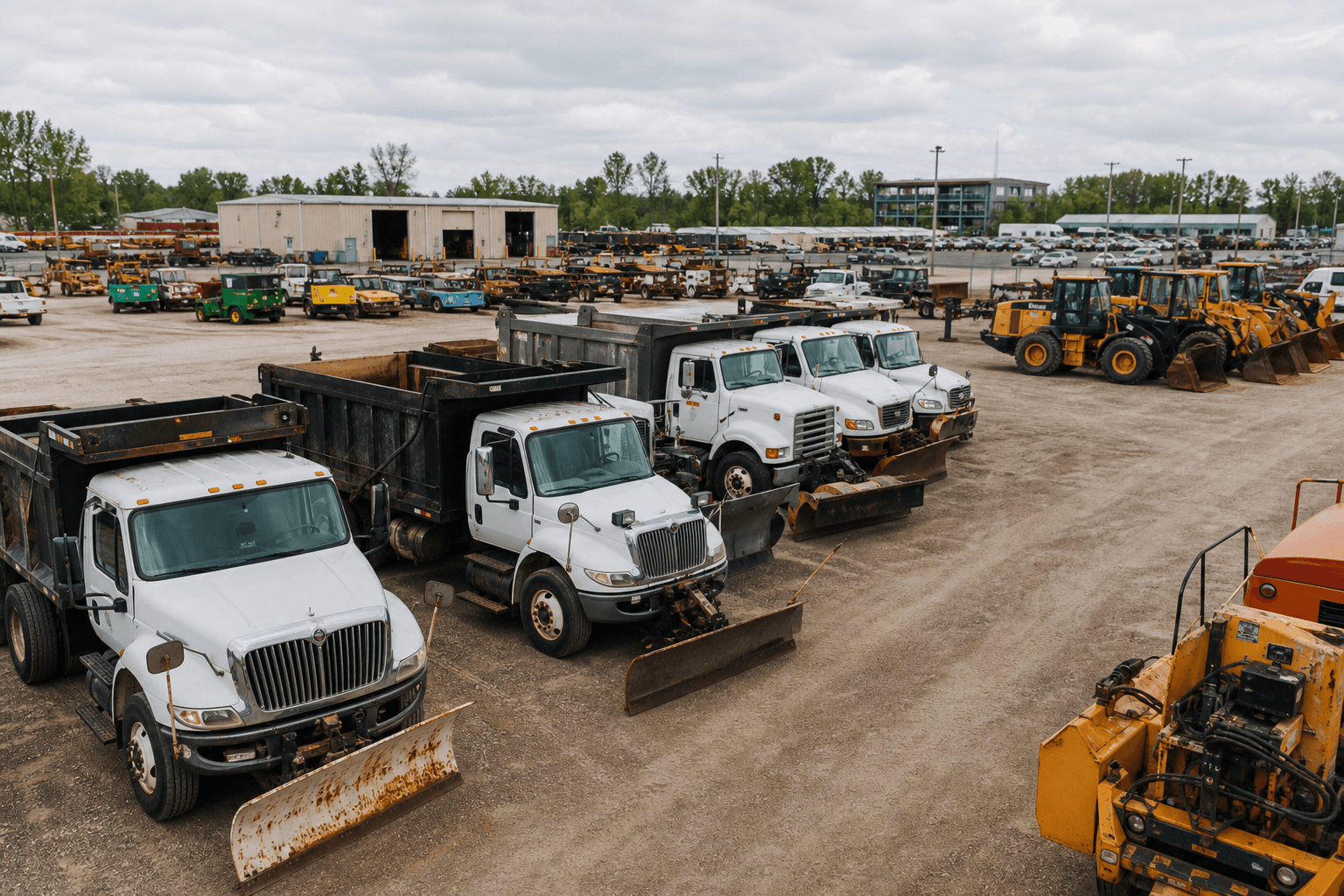
This is where the sourcing landscape changes for anyone shopping for a dump truck for sale. When a city, county, township, or school district retires a dump truck, it goes through a formal surplus disposal process. The selling agency is publicly accountable, the ownership history is typically one entity deep, and maintenance was almost always performed on a documented schedule.
Public fleets operate under procurement and maintenance rules that private owners don't. There's no dealer markup; the agency is recovering value for taxpayers, not maximizing profit for a business.
Municibid's government surplus dump truck listings aggregate inventory from thousands of public agencies across the country. You're buying directly from the government entity, with no middleman between you and the seller. That structure keeps prices honest and documentation available.
If you're also in the market for related equipment, Municibid's heavy-duty truck listings cover a broader range of surplus commercial vehicles worth browsing alongside dump truck inventory. You can also explore Municibid's heavy equipment listings for loaders, graders, and other surplus machinery that often sells alongside dump trucks.
What to Look for Before You Bid or Buy
Whether you're inspecting in person or reviewing photos and disclosures online, work through this checklist systematically. A missed issue on a used dump truck for sale can turn a good deal into an expensive repair bill.
Frame and Undercarriage
Rust on the frame is the most serious structural concern. Surface rust on body panels is cosmetic. Rust that has compromised frame rails, cross members, or mounting points is a different problem entirely. Look at photos from underneath when available, and ask the selling agency directly about any known frame issues. Most will tell you honestly; they have no incentive to hide it.
Hydraulic System
The hydraulic system powers the dump bed. Check for leaks around the cylinder, hoses, and pump. Ask whether the bed raises and lowers smoothly and whether there's any hesitation or drift at full extension. A hydraulic rebuild on a large truck is not cheap.
Bed Liner and Bed Condition
Dump beds take punishment. Look for cracks in welds, significant wear-through on the floor, or damage to the tailgate and hinges. A worn liner is manageable; a cracked bed floor is a fabrication job.
Engine Hours vs. Mileage
Dump trucks often accumulate engine hours faster than road miles, particularly on trucks used for plowing or spreading (the engine runs while the truck sits). When available, engine hours are a better indicator of wear than odometer reading alone. Ask for service records; government fleet units often have them.
Transmission
Allison automatic transmissions are common in municipal dump trucks and are generally well-regarded for durability. Manual transmissions require a driver who knows how to use them on loaded grades. Know which you're buying and factor in driver training if needed.
Plow and Spreader Trucks
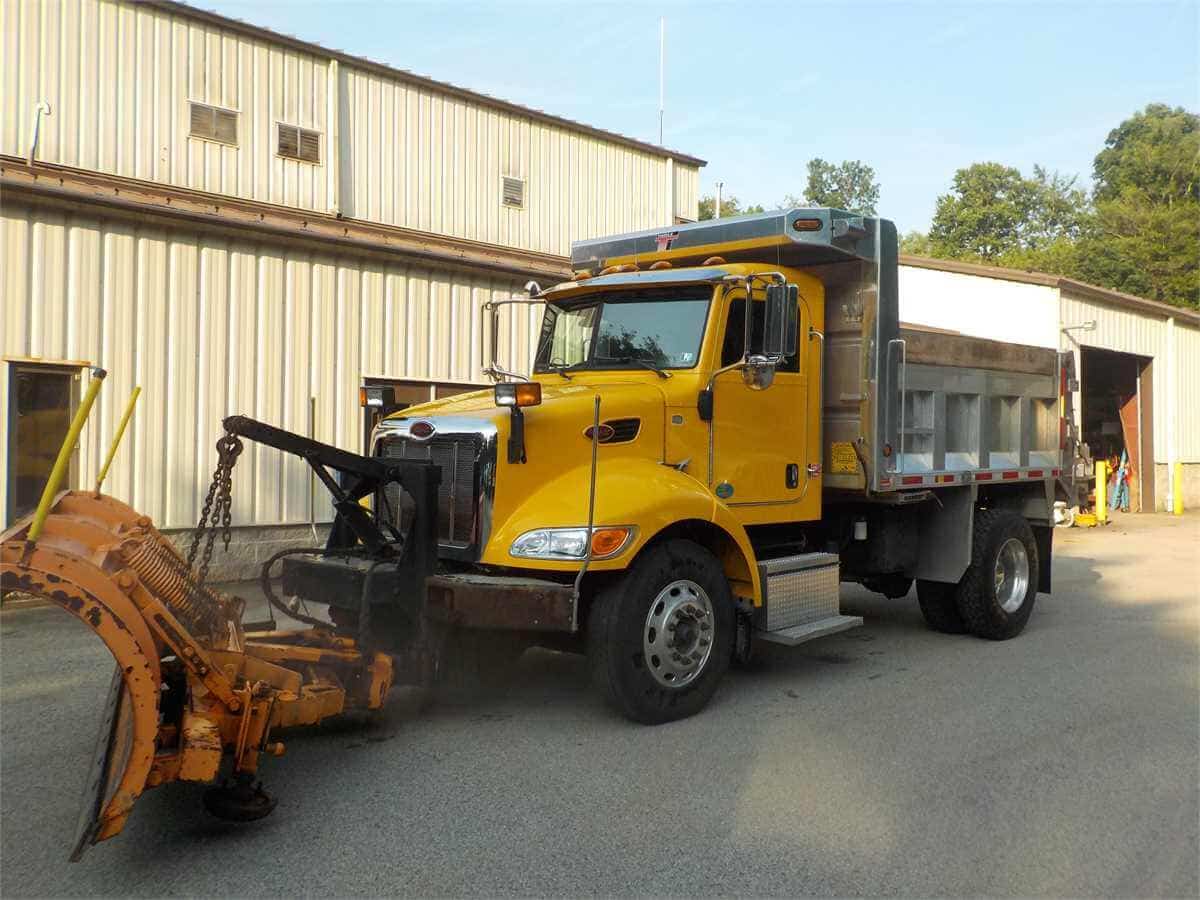
Trucks that spent winters plowing and spreading salt have specific wear patterns. Salt accelerates corrosion on the undercarriage, hydraulic lines, and electrical connections. Look carefully at the underside of any dump truck for sale that shows a plow mount or spreader bracket.
That said, a well-maintained plow truck from a public works department is not automatically a bad buy. It just requires more careful inspection of those specific systems. If you can't inspect in person, contact the selling agency directly. On Municibid, each listing includes agency contact information, and most agencies are willing to answer specific questions about the equipment they're selling.
Understanding the Auction Process for Government Surplus Equipment
If you've never participated in an online government surplus auction, the process is more straightforward than it might seem.
Registration
You'll create a free account on Municibid. Registration takes a few minutes and gives you access to all active listings, the ability to place bids, and bid alert notifications.
How Bidding Works
Auctions run for a set period, typically several days to a couple of weeks. You can place a maximum bid, and the system will automatically bid on your behalf up to that amount as other bidders participate. If someone outbids you, you'll receive a notification so you can decide whether to bid again.
Auction end times often extend automatically if a bid comes in during the final minutes, which keeps the process fair for all participants.
Buyer's Premium
Most online auctions include a buyer's premium, a percentage added to the winning bid that covers platform and transaction costs. Factor this into your maximum bid calculation so you're not surprised at checkout. The buyer's premium is disclosed on each listing before you bid.
Payment and Pickup
After winning, you'll complete payment through the platform and coordinate pickup directly with the selling agency. Government agencies typically require pickup within a defined window after the auction closes. Arrangements for transport (if you need a flatbed or drive-away driver) are the buyer's responsibility.
Title Transfer
Government surplus equipment comes with a clear title. The selling agency handles the title paperwork as part of the transaction. This is one of the genuine advantages of buying a dump truck from a public entity: no lien uncertainty, no salvage title surprise, no gap in ownership history.
How to Set Your Budget and Stick to It
Auction bidding has a way of pulling buyers past their number. Set your ceiling before the auction opens, not during it.
Realistic Price Ranges
Used dump truck prices vary significantly by configuration, age, condition, and region. As rough orientation: single-axle trucks in working condition often sell in the $15,000–$45,000 range at government surplus. Tandem-axle units in good shape can run $30,000–$80,000 depending on age and equipment. Tri-axle trucks with low hours and plow packages can push higher.
These are general ranges; actual auction results depend on local demand and what's bidding on any given day.
What Moves the Price
- Axle configuration. Tandem and tri-axle trucks command more than single-axle units.
- Engine hours. Lower hours relative to the truck's age push prices up.
- Plow and spreader packages. A complete winter maintenance setup adds value, especially in northern states.
- Brand and drivetrain. Trucks built on well-supported platforms (International, Kenworth, Peterbilt, Mack) with common engines tend to attract more bidders.
- Condition documentation. Agencies that provide detailed service records or recent inspection reports often see stronger bids; buyers pay for certainty.
Budget Beyond the Hammer Price
Your total cost of acquisition includes more than the winning bid. Build in:
- Buyer's premium (check the listing for the percentage)
- Transportation costs if you're not driving the truck home
- Registration and licensing fees in your state
- Immediate maintenance, including fluids, filters, belts, and any deferred items you identified during inspection
- Insurance, which for a commercial dump truck should be priced before you bid, not after
Government surplus trucks often come in below private-market comparables precisely because agencies are recovering value, not maximizing it. That gap is real, but it doesn't mean you should skip the budget math. Know your all-in number and bid to it.
For guidance on commercial truck registration requirements in your state, your state's Department of Motor Vehicles or Department of Transportation website is the right starting point. The Federal Motor Carrier Safety Administration also has resources relevant to commercial vehicle operation if your dump truck will be used in interstate commerce.
Common Questions About Buying a Dump Truck for Sale at Auction
Can I inspect the truck before bidding?
In many cases, yes. Government agencies often allow in-person previews before the auction closes. Check the individual listing for inspection details, or contact the selling agency directly using the information provided on the listing page. If you're bidding remotely, ask the agency to answer specific questions about condition, hours, and any known issues.
What if the truck needs repairs after I buy it?
Government surplus equipment is sold as-is. That's standard across all auction channels, not just government surplus. The difference here is that you often have more information going in: documented maintenance history, a single-owner background, and an accountable seller. Budget for deferred maintenance as part of your acquisition cost, and you'll avoid most surprises.
Are dump trucks from government fleets high-mileage?
Some are, some aren't. Municipal dump trucks used primarily for local road work, plowing, and material hauling often have lower highway miles than trucks from commercial fleets. Engine hours matter more than odometer reading for these units. A truck with 80,000 miles but well-documented maintenance from a single county DPW can be a better buy than a 60,000-mile truck with unknown history.
How often do new dump truck listings appear?
Government agencies retire fleet equipment on a rolling basis throughout the year. New dump truck listings appear regularly on Municibid as agencies complete their surplus disposal cycles. Setting up a saved search with email alerts is the best way to catch new listings before they close.
Ready to Find Your Next Dump Truck for Sale?
The inventory changes constantly. Government agencies across the country are retiring fleet equipment on a rolling basis, which means new dump truck listings appear regularly. The best time to set up a search is before you're in a hurry.
Browse current listings at Municibid's dump truck auction page and use the saved search feature to get notified when new units matching your criteria come up for auction. You can filter by location, which matters when you're thinking about transportation costs.
Every dollar recovered through a Municibid auction goes back to the public agency that sold the equipment, back to the communities those agencies serve. Penn Township's surplus truck sale covered road salt for a season. A county DPW's retired tandem-axle unit funded new safety equipment for the crew. That's the throughline: a good deal for the buyer, and real value returned to the public.