




Table of Contents
- Public Works Runs on More Connected Tech Than Most People Realize
- Same Software, Different Outcome: Why the Basics Still Win
- Defending Against the Human Element and Remembering How to Pull the Plug
- "It's Not a Nice Shiny Park": Funding Protection Residents Can't See
- Free Public Works Cybersecurity Resources Worth Bookmarking
- Making Tight Municipal Budgets Stretch Further
- Sources & Linked Resources
- FAQs
Public works cybersecurity comes down to fundamentals: strong passwords, consistent patching, trained crews, and operators who can still run a plant by hand. That is the lesson leaders drew after July 2026 cyberattacks hit roughly 30 Minnesota water systems.
When residents turn on the kitchen faucet, flush the toilet, or drive down a freshly plowed road, they rarely think about the networks running behind the scenes.
As Will Manchester, Public Works Director for the City of Minnetonka, Minnesota, put it on Public Works Radio, "People think of public works, generally they don't, until something happens."
In July 2026, something happened. A wave of cyberattacks struck roughly 30 municipal water systems across Minnesota, alongside other communities nationwide. Drinking water remained safe, and the damage stayed limited to operational disruptions and temporary plant outages. Still, phones at neighboring utilities lit up with residents asking a simple, uneasy question: Is our water safe to drink?
With November marking Critical Infrastructure Security and Resilience Month, public works directors, utility superintendents, IT managers, and national leaders from the American Public Works Association (APWA) sat down on both Public Works Radio and PWX TV to unpack what happened and what every town, city, and county can do before it is their turn.
Their take on public works cybersecurity isn't built on scare tactics or enterprise tech jargon. It comes down to fundamentals, culture, manual backups, and learning how to fund protection that residents never see.
Public Works Runs on More Connected Tech Than Most People Realize
A generation ago, securing a municipal computer meant installing basic antivirus software and calling it a day. Today, public works departments touch digital networks at every step of daily operations, which is why public works cybersecurity now reaches well past the IT office.
In Minnetonka, a Twin Cities suburb of about 55,000 people located right near the communities hit in July, technology runs far deeper than City Hall email:
- Water and sewer SCADA systems automate pumps, water tower levels, lift stations, and chemical feeds.
- Automatic Vehicle Location (AVL) tracks fleet vehicles, routes, and speeds across the city.
- GIS mapping powers utilities, engineering, and natural resources work.
- Field iPads connect mobile crews back to municipal networks through encrypted VPN tunnels.
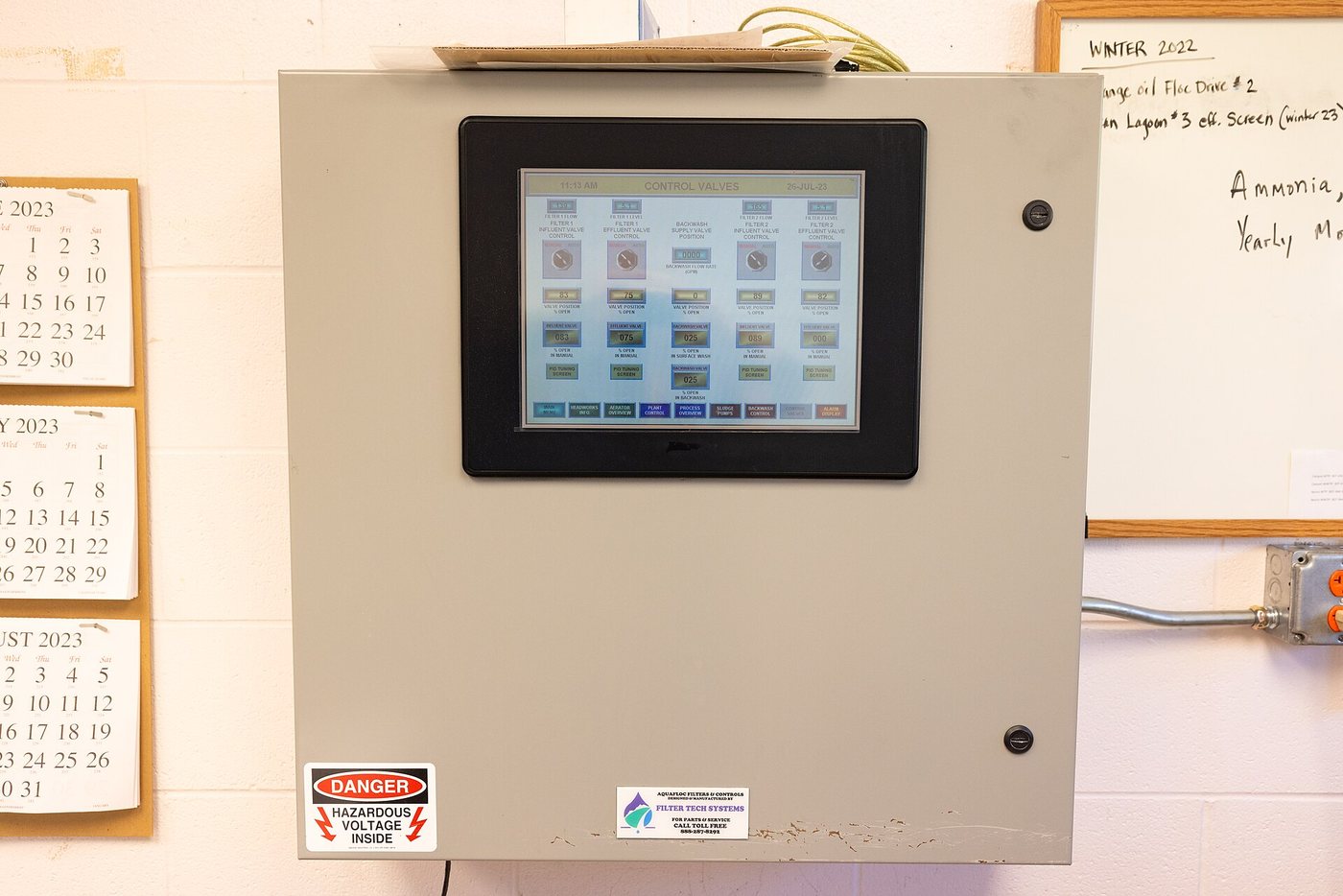
Without those systems, Manchester noted, crews fall back on paper copies and manual workarounds that immediately slow down operations.
And you don't need a direct hit on a water treatment plant to feel the pain. Speaking on PWX TV alongside APWA CEO Scott Grayson, Chicago Department of Water Management Commissioner Randy Conner shared that his department suffered a hack about a year earlier. Attackers didn't even breach Chicago's main city server. They got into the department's administrative Project Management Office, where third-party applications lived. Chicago shut the compromised environment down immediately and traced how the intruders got in. Even with that quick response, rebuilding took roughly six months.
Same Software, Different Outcome: Why the Basics Still Win
One of the sharpest public works cybersecurity lessons from the Minnesota attacks came from Russ Matthys, Public Works Director for the City of Eagan, Minnesota.
On PWX TV, Matthys revealed that Eagan ran the exact same SCADA software and provider as two Minnesota cities that were breached in July, and Eagan does use remote entry. Yet Eagan was never hacked.
Why?
"We listened to our IT folks," Matthys said. Eagan's IT team was relentless about password standards and security protocols, and public works followed them.

Minnetonka IT Manager Jeff Dulac echoed that exact theme on Public Works Radio. Most intrusions don't rely on Hollywood-style hacking; they walk right through unlocked doors. Dulac pointed to the straightforward "blocking and tackling" of public works cybersecurity that cuts down a city's attack surface fast:
- Patch software consistently. Unpatched Microsoft, Adobe, and third-party software remains the easiest entry point for attackers.
- Replace aging, internet-connected gear. Staying on top of equipment replacement in water and utility systems prevents legacy devices from becoming permanent weak spots.
- Lock down endpoints. In Minnetonka, staff cannot install or uninstall software on their own; everything routes through IT.
- Upgrade beyond legacy antivirus. Modern Endpoint Detection and Response (EDR) continuously monitors devices, flags threats in real time, and feeds automated alerts. Because water and public safety run 24/7, Minnetonka pairs its EDR with an overnight monitoring service ("Cyber Heroes") willing to call Dulac at 3:30 a.m. if something looks wrong.
- Scan regularly and stay plugged into alerts. Routine vulnerability scans, combined with threat advisories from the Multi-State Information Sharing and Analysis Center (MS-ISAC) and state peer groups, help agencies spot trouble before it spreads.
Defending Against the Human Element and Remembering How to Pull the Plug
Ask IT and public works leaders what keeps them up at night, and you'll hear two answers: how fast AI-driven threats are evolving, and the human element.
"Someone can click on a phishing message and it can take everything down," Dulac said.
The challenge for public works cybersecurity training is that most employees don't sit at a desk all day. Training has to fit how field crews and operators actually work:
- Start on day one: Minnetonka puts every new hire through a one-hour cybersecurity onboarding session, hands out paper quick-reference sheets, and runs regular phishing tests every month or two.
- Use tailgate talks: In Eagan, Matthys supplements annual online training with informal morning tailgate talks. After the July attacks, supervisors sat down with frontline crews to walk through what happened in neighboring cities and how Eagan would respond.
- Build a "see something, say something" habit: Minnetonka Utility Superintendent Chuck Allen constantly reminds crews using iPads or SCADA screens to speak up the second something looks off, like a cursor moving on a terminal when nobody is logged in. One quick call to IT can stop an incident in its tracks.
- Practice before the real thing: Minnetonka recently ran a citywide tabletop exercise simulating a water-system cyberattack across three escalating scenarios ("injects") with department heads and managers. Eagan runs an annual emergency management tabletop, and Chicago pairs semi-annual staff training and tabletops with live penetration testing alongside CISA, DHS, and the FBI.
In public works cybersecurity, analog readiness matters just as much as digital defense. Automation makes utilities efficient, which also makes it easy for operators to forget how to run a plant without a screen.
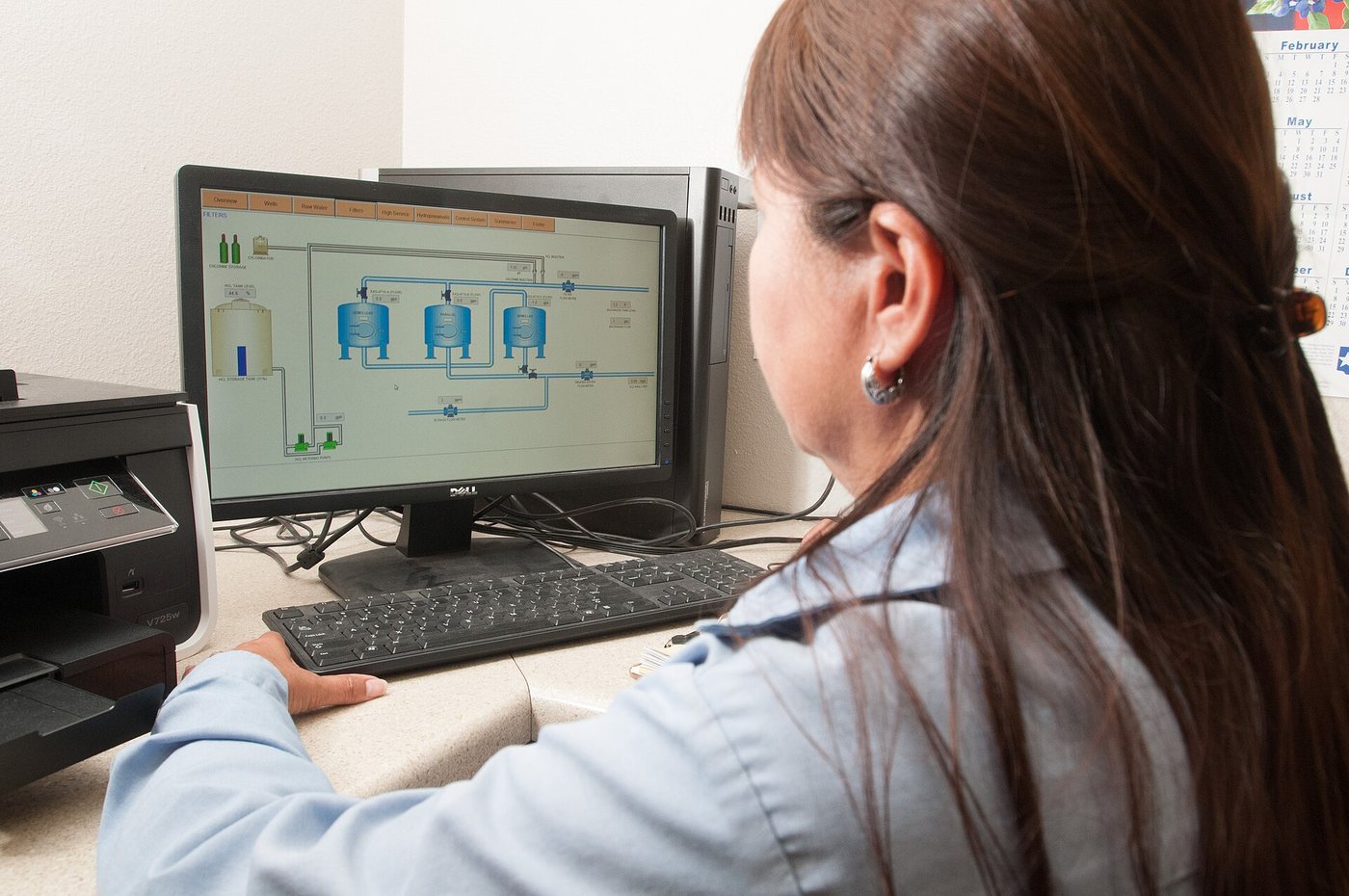
Allen's solution is blunt: every so often, turn the computer off and see what happens.
"Pull the plug," Allen said. Make sure operators know what water tower level maintains safe system pressure so you don't trigger a boil-water order, which pumps need to be flipped on and off manually at the treatment plant, and how to station staff at towers and lift stations if SCADA goes dark. You hope you never need those skills, until the day you do.
"It's Not a Nice Shiny Park": Funding Protection Residents Can't See
Small and rural communities face a different reality than major metros. When APWA CEO Scott Grayson visits small clean-water and wastewater plants and asks, "What's your cyber plan?", he often hears one of two answers: "My what?" or "We know we should have one, but we don't have the money or staff."
Many smaller towns don't even have an in-house IT department; they rely on contracted support and lean public works crews. And as Chuck Allen noted, selling public works cybersecurity to a city council is tough:
"It's not a nice shiny park that somebody can play in, but it matters."
Leaders from all four cities offered practical ways to fund public works cybersecurity and close that gap:
- Start small. Something beats nothing. Chicago's Randy Conner urged resource-strapped agencies not to get paralyzed by trying to build a massive program overnight. Start with a basic plan, lean on neighboring towns that have already done the legwork, and build toward a five-year goal.
- Start with your system integrator. If you don't have a strong IT department behind you, Dulac recommends calling your SCADA or system integrator first and asking neighboring cities what safeguards they've put in place.
- Frame assessments as an investment. After Eagan hired a consultant to complete a Risk and Resilience Assessment (RRA) and walked staff through the findings, Matthys noted that the return far outweighed the upfront cost.
- Educate councils year-round, not just during a crisis. In Minnetonka, Manchester works through the city manager and communications staff during every Capital Improvement Plan (CIP) and budget meeting to explain how interconnected the city's utilities really are.
- Don't overlook cyber insurance. Dulac called this the question almost nobody asks. Because any municipality can eventually face an incident, Minnetonka carries a $5 million cybersecurity insurance binder (roughly $50,000 a year) that doesn't just offset financial loss. It brings immediate access to incident-response specialists, legal counsel, and crisis media support.
- Build mutual aid before you need it. As Allen pointed out, neighboring municipalities are often physically connected. Strong local, county, state, and EPA/Department of Health relationships mean neighboring cities can share staff, or even open interconnecting valves to supply water, when an emergency hits.
Free Public Works Cybersecurity Resources Worth Bookmarking
You don't have to build a public works cybersecurity program from scratch, and you don't have to pay consultant rates for every step. Several resources highlighted in the episode are free or grant-funded for local agencies:
- Cybersecurity and Infrastructure Security Agency (CISA): Offers no-cost cybersecurity assessments, technical assistance, free training, the Cyber Resource Hub, StopRansomware.gov, Cross-Sector Cybersecurity Performance Goals (CPGs), and a direct incident-reporting portal at cisa.gov/report. As APWA Senior Government Affairs Manager Marty Williams noted on PWX TV, APWA even partnered directly with CISA to build a first-of-its-kind cybersecurity course tailored specifically for public works professionals, after walking CISA officials through Twin Cities water treatment plants to see day-to-day operations firsthand.
- CISA's State and Local Cybersecurity Grant Program (SLCGP): Jointly run by CISA and FEMA, this $1 billion four-year federal grant program (including $91.7 million announced for FY 2025) is built specifically for state and local governments. States apply through their State Administrative Agencies (SAAs) and are required by law to pass at least 80% of funds to local governments, with a minimum of 25% dedicated to rural communities. The program also lays out a practical baseline checklist: multifactor authentication (MFA), enhanced logging, data encryption, retiring unsupported internet-facing hardware/software, banning default passwords, tested system backups, threat sharing with CISA, and migrating to .gov domains.
- CISA Critical Infrastructure Security and Resilience Month Toolkit: Includes CISA's four-step resilience framework (know your infrastructure and dependencies, prioritize risks, make actionable plans, measure progress), ready-to-use graphics and plain-language copy for resident outreach, and Priority Telecommunications Services (GETS, WPS, and TSP) to keep essential staff communicating when commercial networks are congested or degraded.
- FCC Cybersecurity Resources: Guidance and updates focused on the reliability and security of the communications and broadband networks that remote telemetry, VPNs, and emergency systems depend on.
- Hear the full conversations: Listen to Public Works Radio's episode with Minnetonka's team and watch the PWX TV panel with Chicago, Eagan, and APWA leaders below.
Making Tight Municipal Budgets Stretch Further
Every public works director and borough manager knows the math problem behind Chuck Allen's comment. Councils want to fund parks, paving, and visible services, while behind-the-scenes essentials like replacing aging utility hardware, funding annual risk assessments, or carrying cyber insurance have to fight for every line item.
Federal grants like CISA's SLCGP and free CISA/APWA training can cover real ground on public works cybersecurity. So can making sure your agency isn't leaving money sitting in the back lot. We have written before about why some agencies underperform on surplus recovery and what happens to surplus strategy when water takes priority.
At Municibid, we've spent 20 years helping more than 7,500 government agencies, schools, and utilities turn retired dump trucks, loaders, service vehicles, and surplus equipment into real budget revenue, at zero cost to the agency. Every winning bid goes straight back to the community that owned the asset, helping stretch tight general funds and capital budgets toward the priorities that keep residents safe, whether they see them or not.
Sources & Linked Resources
- Primary Source, Public Works Radio (APWA), Episode 18: The Cyber Challenges Behind America's Critical Infrastructure (featuring Will Manchester, Jeff Dulac, and Chuck Allen of the City of Minnetonka, MN; hosted by Bailey Dickman, Nov. 18, 2026)
- PWX TV Video (YouTube): Public Works Leaders Talk Cybersecurity (featuring APWA CEO Scott Grayson, Chicago DWM Commissioner Randy Conner, City of Eagan Public Works Director Russ Matthys, and APWA Senior Government Affairs Manager Marty Williams)
- Cybersecurity and Infrastructure Security Agency (CISA)
- CISA State and Local Cybersecurity Grant Program (SLCGP)
- CISA Critical Infrastructure Security and Resilience Month Toolkit
- Federal Communications Commission (FCC) Cybersecurity Content
- City of Minnetonka Public Works
- Additional Show Notes Link (APWA MarCom Award Episode): Why Did the Chicken Cross the Road? To Serve Our Communities
Cover photo: City of Minnetonka water tower by Tony Webster, CC BY-SA 2.0, cropped. Eagan water tower by Tony Webster, CC BY 2.0, resized. SCADA and operator photos courtesy of the National Park Service and USDA, public domain.
FAQs
Where should a small town with no IT department start?
Start with two free phone calls: your SCADA or utility system integrator, and the public works director in a neighboring town that has already built a cyber plan. Pair that with CISA's no-cost Cyber Resource Hub and check with your State Administrative Agency about local sub-awards under CISA's State and Local Cybersecurity Grant Program (where at least 80% of funding must go to local governments and at least 25% to rural areas).
If our water or public works systems are automated, do we really need manual-override drills?
Yes. As Minnetonka's utility team emphasized, day-to-day automation works so reliably that staff can easily lose the muscle memory required to run pumps, monitor tower levels, and maintain system pressure without a computer screen. Periodic "pull the plug" drills and tabletop exercises ensure a cyber outage stays an operational inconvenience instead of a public health emergency.
What is the single highest-impact habit we can start this week?
Enforce basic cyber hygiene consistently across both office and field staff: keep software patched, prohibit default passwords, enable multifactor authentication wherever possible, and add a five-minute cybersecurity "tailgate talk" to your next crew meeting so everyone knows what suspicious activity looks like and who to call immediately.